Tuesday, 22 May 2007

El Sistema

cyntillating sounds opus six

Venezuela is in the political dog house at the moment. President Chávez is just too friendly with Castro, too money mad with oil, and just too cheeky for the western world. He needs a more liberal strategy and certainly a better spin doctor.

The best advertisement for Venezuela recently is not political but musical: Gustavo Dudamel, a 26 year old conducting phenomenon already becoming a household word around the classical music globe. Behind the talent, good looks, well run career and unbridled youthful enthusiasm for the greatest symphonies ever written, Dudamel has a special personal story. He is a product of ‘el sistema’; the name sounds horrific and conjures up some smelly left overs from bad regimes, both left and right, sore spots from man’s violent history.

But ‘el sistema’ is a miracle of an idea: partner kids with no future and very great music, take a long, deep breath, dare to hold on and wait, spend some money on it and you get the likes of Gustavo Dudamel, selling giga number of records, getting the best conducting jobs now on offer and being a perfect role model to the young for interesting them in classical music in far more liberal countries than Venezuela, both rich and poor.

Thirty years ago, an economist, José Antonio Abreu, had the visionary idea of confronting kids from bad neighbourhoods with instruments of good music. He gave them those instruments, organized lessons and orchestras and el sistema was off and running. As quoted by Shirley Apthorp, one young clarinettist with an extensive police record was amazed when he was not only handed a clarinet but told it was his, saying “it felt better in my hands than a gun”. Dudamel was another such young kid with a dubious origin who has turned his musical upbringing into a formidable career in the blink of an eye.

One can only speculate with mouth watering pleasure what a guy like Gustavo can do for classical music in a place like L.A. where he has recently been appointed as Music Director of the Philharmonic. So close to bad neighbourhoods needing an uplife, so close to Hollywood, new media moguls, and with those looks, that talent and that musical given.
And it is surely within the realm of reason that he can turn around the aging public that attends the subscription concerts of the LA Phil, a group one former administrator described as ‘the Rotary club for the over eighty’.

Sports have their heroes at regular intervals. Classical music has its own, of course. But since the death of Leonard Bernstein, American classical music has not since had this kind of charisma on its shores. Being himself a product of a political system in which arts education is a high priority, let us hope that some of that oddly rooted wisdom can rub off on American educational arts projects and media decision makers: let’s get Gustavo Dudamel into our schools and tv sets as soon and as often as possible in the coming years!

Monday, 9 April 2007

Passion for the Passion

cyntillating sounds opus five

So Mummy, ‘how’s your backside?’. It’s my daughter calling, asking after Easter plans, knowing that, like clock work, the day before is spent in church listening to the St. Matthew Passion on extremely hard wooden benches: a perfect ambiance but less than ideal comfort. What Handel’s Messiah is for Anglo-Saxons, Bach’s Matthew Passion is for a great deal of Germans, and for every single Dutchman. Two rich traditions: the Concertgebouw Orchestra in Amsterdam and the Netherlands Bach Society in Naarden, have instilled in the Dutch a true passion for this particular passion. Number two on society’s 'must be there' list, it is astounding that year after year a long and complex work by Johann Sebastian Bach immediately succeeds the first catch of North Sea herring in importance in the collective national conscious. Performances are sold out years in advance, you basically have to inherit tickets to get in, or alternatively, have been recently named to a cabinet post; the Passion in the Great Church of Naarden on Good Friday is where politics and society meet in multicultural and religiously tolerant (albeit more or less), modern Holland.
Founded in 1921 and having survived a crisis of interpretation and organisation in the mid-eighties, the Netherlands Bach Society made an extremely smart and sensitive move by then hiring an as yet little known young conductor Jos van Veldhoven to breathe new life into their passion tradition. Van Veldhoven, an amicable and extremely effective communicator, in turn intelligently installed a system in which he only conducts every other year, biannually turning over the high point of his own season to guest conductors, even giving them musical carte blanche. Not only does one have to be there in these ‘guest’ years to know what musicological, interpretative or practical turn the performance will take, van Veldhoven himself has caused the occasional stir or two when he conducts, as he did most recently in 2006 when his modestly sized choir was yet again slashed back in volume. The result: a completely new sound coming from a minimal group of vocalists as well as the next round of musical controversy and attention.

Brit Richard Egarr was invited to conduct this year and, as expected, creatively stirred things up yet again. World renowned for his brilliant keyboard improvisations, and in general as being a musician with a naughty twinkle in his eye, Egarr performed the early version of the Passion which dates from 1727 (as opposed to the 1736 version most used). This self proclaimed ‘anti-control freak’ seeks to avoid routine like the plague: fresh notes as ingredients to a fresh approach; he is therefore, a perfect match for the NBV. On the one hand this meant missing out on some beloved passion elements like the boys choir in the chorales, and even the last beloved chorale of the first half. The melancholic sighs in the violin solo of Erbarme dich were lost too, a shadow of them only vaguely to be heard towards the end of the aria, a fashionable decoration that Bach clearly added only later. But there were moving surprises to be enjoyed as well: the replacement chorale at the end of the first half was in itself lovely, and the lute accompaniment to the aria Komm, süßes Kreuz (as opposed to the viola da gamba regularly used) compelled the baritone soloist to a soft and touchingly intimate interpretation.
The Netherlands Bach Society has a long tradition of scouting and engaging young talent, a musical must due to budgetary restraints. Great names like Andreas Scholl and Johannette Zomer once started their international Bach careers here in Naarden. This year’s most promising talent was tenor Andrew Tortoise, a pleasing and strong voice and one clearly supported by a dramatic and well developed musicality.

It is a bit of a circus, this passion for the Passion. On Good Friday and Easter Saturday there is an intermission lengthy enough so that lunch can be served: comfortable and yet absurd of course, parallel to the intermission’s culinary delights at England’s Glyndebourne Festival. And that is where Egarr will surprisingly next take his Matthew Passion. He will stage one on that revered operatic stage, in itself newsworthy, but this in the summer: Good Lord! A definite 'not done' for the Dutch.

Catch them if you can when The Netherlands Bach Society tours the US briefly at the end of this month with Bach’s B Minor Mass,
or when they return to Tanglewood with the same this coming July. Van Veldhoven will then himself conduct this inspired ensemble for whom routine is a very, very bad word and ever-renewed inspiration, a modus.
See for further information: http://www.bachvereniging.nl/ or http://www.bso.org/

Wednesday, 4 April 2007

What’s for dinner this season?

cyntillating sounds opus four

It’s April, and symphony orchestras all over the world publish their menus for their subscription series coming season.

So what’s cooking?

To start with, here, just around the corner, the Royal Concertgebouw Orchestra has a wonderful menu for 07-08. There is lots of Olivier Messiaen planned, symphonic of course (Les offrandes oubliées, L’Ascension, Turangalîla) but also, in happy collaboration with the orchestra’s home The Concertgebouw, chamber music, all to celebrate the composer’s birth year of 1908. This also allows a taste of the Concertgebouw’s graceful organ from time to time. The RCO’s ‘great maestros’ programming (isn’t that one and the same thing, great and maestro?) even features little knives and forks next to certain dates, so there the menu is not only the likes of Kurt Masur, Bernard Haitink, Daniele Gatti and Nikolaus Harnoncourt, but real food as well. André Previn will be conducting his ex-wife Anne-Sophie Mutter in Tchaikovsky’s violin concerto, so cutlery might fly during those concerts. Chief Conductor Maris Jansons is served up in all the series as he feasts on not only Messiaen but also Kancheli, Bartók, Beethoven, R. Strauss and Mahler to name but a few. Jansons’ menu in Munich where he is also Chief of the Bavarian Radio Symphony Orchestra is a bit more meat and potatoes, but who wouldn’t mind conducting Beethoven’s Ninth for the Pope in Rome? And Von Karajan, who also ‘turns 100’ in 2008 is reason for Jansons’ performance of Brahm’s Deutsches Requiem.

Despite important billing as conductor emeritus in Amsterdam, Riccardo Chailly, now Chef in Leipzig, has not been asked back for dinner, but will himself be cooking up a storm with his new German orchestra: starting with an appetising Mendelssohn festival in September, the Gewandhaus programming has a bit too much measuring cup type recipes in the rest of its season for my taste: concerts for the 50th anniversary of the death of Sibelius, the 100 year anniversary of Grieg’s passing, and even the 125th anniversary of Wagner’s trip to the other side. Not a very creative numbers game. But Chailly has his own Pope, at least in a performance of Mark-Anthony Turnage’s ‘Three Screaming Popes’, and it’s not Leipzig if there isn’t a good deal of Bach. Gewandhaus should be lauded for inviting American conductor John Mauceri – he is great and not enough on European soil – if only to conduct film music which is only one of many meals he serves up extremely well.

The wait is on for other European gourmet delights as, even though they have done the shopping and sent out the press releases, the details are still unknown in Paris and London.
Birmingham, Berlin and Budapest will quickly follow suit; finishing up will be the Vienna Philharmonic, appropriately so being the chocolate dessert capital of the world.

More mouth watering morsels to follow soon…

Sunday, 25 March 2007

Nationality ~ Musicality

cyntillating sounds opus three

There is a heated debate raging here in the Netherlands at the moment on the subject of passports. Usually you only need one in life to travel from a to b, but in this ever shrinking and mobile world, many people nowadays have two. For some, an opportunity, for others, a problem. A Dutch daily yesterday advertised for persons under the age of 5 months, looking for those babies who (already) have two passports…, for a photo shoot! The discussion is clearly digressing from the politically suspect to the completely ridiculous. Nationality as considered equivalent with loyalty: how can a subject of the King of Morocco, for example in these Islamic-sensitive times, be completely loyal to the secular Dutch monarchy and its government? It all gets even more sticky when considering the fact that the wife of the local Crown Prince has got a second passport. Born in Argentina, that country, like Morocco, never ‘let their people go’, at least not on paper.
And as this debate comes to a full emotional boil, a petite yet charming event took place on Saturday in the central city of Utrecht: the semi-annual gathering of the ‘Friends of Dutch Music’. In contrast to those painters with Dutch passports, Rembrandt, Van Gogh, de Kooning (bet he had two!), etc., Dutch composer’s are not really all that well known around the world. And some of those better known were indeed born outside of Holland; they therefore get subsequently dumped as ‘not really Dutch to begin with’. Should we be so strict with American citizenship in terms of music, the USA wouldn’t get to keep anyone of significance, except perhaps those with names beginning with Arrow, Feather or Eagle.
Actually, there are a number of famed Dutch composers. Jacob van Eyck, for example, who died exactly 350 years ago, is one of these, our local ‘blind Lemon Jackson’ as it were; Jan Pieterszoon Sweelinck is another, and closer to this era, Louis Andriessen. The most famed, by far, even for those over 18, is. of course, DJ Tiësto (remember the Olympic Games in Athens?).
And so the Dutch friends gathered to honour and enjoy their own. The proceedings got a creative kick off when a virtuoso recorder player, Saskia Coolen, performed together with the virtuoso and guru carilloneur of the Utrecht Cathedral, Arie Abbenes, her instrument of a foot’s length teaming up with his bell tower 112 yards high (highest church steeple in the Netherlands). She could certainly hear him, even without looking up: seems he could hear her via her mobile phone.
Camerata Trajectina, an ensemble which has been performing old music in the Netherlands since the avant garde movement of that repertoire in the 1970’s, continued the concerts with good ensemble work and well pronounced Dutch teksts (and that is not easy). There was a lecture by Van Eyck expert Dr. Thiemo Wind. A huge, young talent, pianist Ralph van Raat, wound up the proceedings by performing works by contemporary Dutch composers all of whom had, in one way or another, been inspired by the bell towers so prevalent in their country.
Dutch music certainly has good and true friends. Rightly so. It is excellent in the fields of old music and contemporary, even avant garde repertoire. But should we even be labelling it as such these days? Have all the relevant passports been checked out, are there any doubles out there? Such a tiny country has always been in a constant and often strained relationship with its enormous neighbors. As many regret the lack of a Dutch history of music as constant and renowned as its history of painting, those Friends that gathered Saturday were still convinced that, as the souvenir t-shirt explains: it ain’t much if it ain’t Dutch.

Want to read more?:
Dutch Culture in a European Perspective, Douwe Fokkema and Frans Grijzenhout, editors
Contemporary Music in the Low Countries, Emile Wennekes and Mark Delaere
The Essential Guide to Dutch Music: 100 Composers and their works, Jolande van der Klis, editor

For those in the neighbourhood this coming July, the Berkshire Music Festival will be featuring Dutch music and artists at Tanglewood:
See further http://www.bso.org/
http://www.jacobvaneyck.com/
http://www.camerata-trajectina.nl/
http://www.ralphvanraat.com/
http://www.vriendennederlandsmuziek.nl/
http://www.donemus.nl/ where you can even order the cd: Who’s Afraid of Dutch Music without even showing your passport

Sunday, 18 March 2007

Storm warning: gail force music

cyntillating sounds opus two

We had hail, strong winds and even snow today, the 18th of March; the winter we’ve missed this year seems to be catching up with us in the end. Dutch winds can be extraordinary: an exceedingly flat country next to the wild and stormy North Sea, we have had our share of broken glass due to hail stones ‘the size of golf balls’. No wonder really that the landscape here is dotted with huge modern wind mills, the high tech version of the age old icon, a natural source of energy in these harried days of inconvenient truths. Wind energy, wind power, together they are a musical play on words, in the Dutch language that is, one that has recently inspired a theatre production.

Stand up comedians are a relatively new thing here in the Netherlands, but they are booming business. Stand up trumpet players are far more exotic. André Heuvelman is such a colourful bird. The solo trumpeter of the Rotterdam Philharmonic, a member of the distinguished and creative Netherlands Blazers Ensemble (English translation is just NBE) and a conservatory favourite for the next generation, Heuvelman develops his talents, unbridled energy and creativity in a Foundation he has (aptly?) named extase (ecstasy -no, not the pills).

So the stand up trumpet arrives, message in his heart, technique in the back of his sedan, for an evening’s entertainment, una voce. Having worked together with the famed film director Cherry Duyns, Heuvelman has built an hour long routine that mixes music, emotion and movie magic. It releases classical repertoire from its present day straight jacket by placing it in a new context, the story of a little boy whose inner strength, whose answer to the fickle finger of fate, is playing the trumpet.

Ask any radio host, musicians are not good interview subjects. They do not speak well, communicating best via their instruments. When using words, they are usually at a loss for them. Heuvelman is exceptional in this way, certainly in the context of his country and heritage, one in which self exploration is nearly always equated with self absorption; the Dutch saying is difficult to translate but it boils down to: be normal, that’s crazy enough in itself…

But here is a musician whose facial expressions are endless, whose face is elastic, who dares to share a vulnerability that all artists know well but few musicians dare to face, in any case those classically schooled and orchestrally employed. Windkracht is an effective monologue of an hour or so which tells Heuvelman’s personal and musical story, laying bare his fears, triumphs, ideals and idols, one in which a trumpeter dares to sing in counter tenor falsetto, dares to improvise with a double bass blues riff (on film) and one in which he submits himself to the erotic movements of a tango dancer who circles and re-circles him in tight black clothes and provocative red heels.

Granted, some elements of the show are not completely successful in this work-in-progress (which took place in our living room, without lighting, audience at a nose’s length): reading from prose is, for example, harder than it looks. But the musical mix of Schubert, Monteverdi, de Falla, Booker Little and Goebaidulina, augmented with Heuvelman’s own jazz improvisation, is tender, sweet and extremely moving. It’s about him, it’s about his body, his life, his music. As opposed to the restrictive etiquette of classical music stages, Windkracht is refreshing, touching and special.

See also www.wind-kracht.nl

Thursday, 15 March 2007

Message in a Bottle: Sting In Amsterdam's Concertgebouw

cyntillating sounds opus one


One of the world’s most beautiful people announced a concert in the world’s busiest hall: the press jumped on it as did the fans. Sting’s Amsterdam Concertgebouw concert was sold out in less than an hour, normal procedure for a stadium pop fest, rather unusual for the dignified classical temple. Pretending to again be 18, I too got up early that one morning in December and started emailing until I successfully laid my hands on four tickets. The sale indeed began exactly on the prescribed hour.
What to expect from the combination of John Dowland – who faithfully served Queen Elizabeth I – as sung by Sting- famed subject of Queen Elizabeth II? I must admit, being on the jury for the Edisons classical awards I had already received the CD and wasn’t all that impressed with this ‘musical soundtrack’ as Sting himself calls his discovery of the lute ‘singer songwriter’ from ye olde England. The tracks are caring in their way, but oddly enough, very chilly. And when good music gets a cold interpretation, all technical shortcomings are plainly front and centre stage. So listening to the CD, I often sat criticizing notes of out tune, strange dynamics, an unexpected lack of diction, and so onward raves the classical reviewer.
But placing the project in such a context is of course, ridiculous. More interesting questions are: would Sting fans become instant classical music lovers, can Sting reverse the aging classical audiences and bring in the youth, could his fame do something significant for Dowland, make him a media hype like Shaffer’s Amadeus did for Mozart?
A huge banner with his photograph graced the Concertgebouw’s famous front face with what every artist dreams of: the black and white diagonal sold out. The hustle and bustle on the street surrounding the hall was conform any production there; attractive, hip people, in a good mix of generations, lots of black clothes and no ostentatious furs, a true Amsterdam public. When music is amplified, terribly ugly red curtains mar the Concertgebouw’s beautiful stage, out of necessity; its acoustics first need to be dampened before they can be artificially controlled. That was actually the biggest question before the concert started: would this work for the ears at all - lutes and a single voice - through microphones in this fair sized hall? And that is the first problem actually, as lute player Edin Karamazov bites into Bach’s famous Toccata and his notes come to us from the string of speakers on the side of the stage. But we forgot that problem as Karamazov clearly had bitten of more than he could chew in the Bach, had a black out and basically faked his way through the tough bits.
Then he came out and all was instantly forgiven. The first few Dowlands were tentative, very reminiscent of the CD, but Sting’s presence and natural musicality quickly kicked in and took over. Half way through he started to even impress with his diction, rhetoric, fondness and understanding for the medium he was performing in. Lutenist Karamazov was at times a very good accompanist, but at times also very busy with tremolos which were supposed to enhance his virtuosity. Humbug. A small choir accompanied too, Stile Antico, young, sweet and not very exciting save the two marvellous bass voices Oliver Hunt and James Arthur. A hoard of photographers swarmed the aisle and were very annoying with their constant paparazzi clicking noise. Karamazov sensibly sent them away.
Must admit though, that the concert really took off as the encores began. Without an intermission, short song followed short song and declamation from Dowland’s letters for more than an hour. And all of a sudden it was over; Sting stood up and quickly (yet elegantly) left the stage.
The best was yet to come. Not only did the fans get their Message in a Bottle (hampered here by silly lute chords instead of the very powerful open bass of the original), but alternating Sting hits with Dowland makes real sense. The singer songwriter of yore meets one of today, and the universality of it is heart warming. A touch of Robert Johnson, the blues singer not the Dowland contemporary, a cheeky joke on Sting’s part, was delicious. Favourite for me was Fields of Gold whose melody, harmony and text are closest to the classical idiom: it was worth the wait.
I don’t expect to play the CD often here at home, but should gorgeous Sting again come to town for what he does best – live performance – I’ll certainly set my alarm clock to get my hands on some tickets.

Wednesday, 14 March 2007

Where we are....


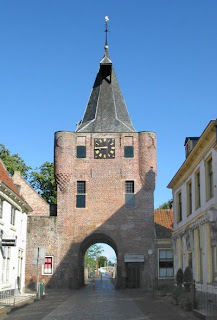
We're in beautiful Elburg in the Netherlands. This is the Elburg Lighthouse in the city center.

Maps Long Before Google Maps


Elburg in 1867. Electric light has been put in since then!

Welcome to the First Post

Hello, and welcome to the first entry in WW Classics' blog. We're busy building a new concept in concert experiences - put "live" back in the classical music experience. Watch this space.